

Coming Home in a Season of Change
I recently traveled to Kenya, as I do every so often. But this visit felt different.
For one, it was December, a time I rarely travel home. The Christmas season in Kenya has a rhythm of its own, beginning around Jamhuri Day (December 12), when people working in cities begin the annual migration “upcountry” to reunite with family for Christmas and the New Year. The air feels different, anticipatory, busy, alive.
After landing in Nairobi, I began the now-familiar journey to Nakuru. What used to be a 90-minute drive has become an all-day affair. The Nairobi–Nakuru highway, long overdue for a serious upgrade, was packed with vehicles all heading in the same direction. Slow-moving traffic tested everyone’s patience, but it also mirrored something deeper, Kenya’s rapid growth and the strain that comes with it.
Eventually, I arrived in Nakuru, the town where I grew up and which was officially elevated to city status in 2021.
Nakuru Then and Now: Growth, Strain, and Resilience
The Nakuru of my childhood (1970s–1980s) was quiet, almost sleepy. Life moved at a measured pace. Businesses operated from 8 a.m. to 5 p.m. from Monday to Friday, after which the town seemed to shut down.
That Nakuru no longer exists.
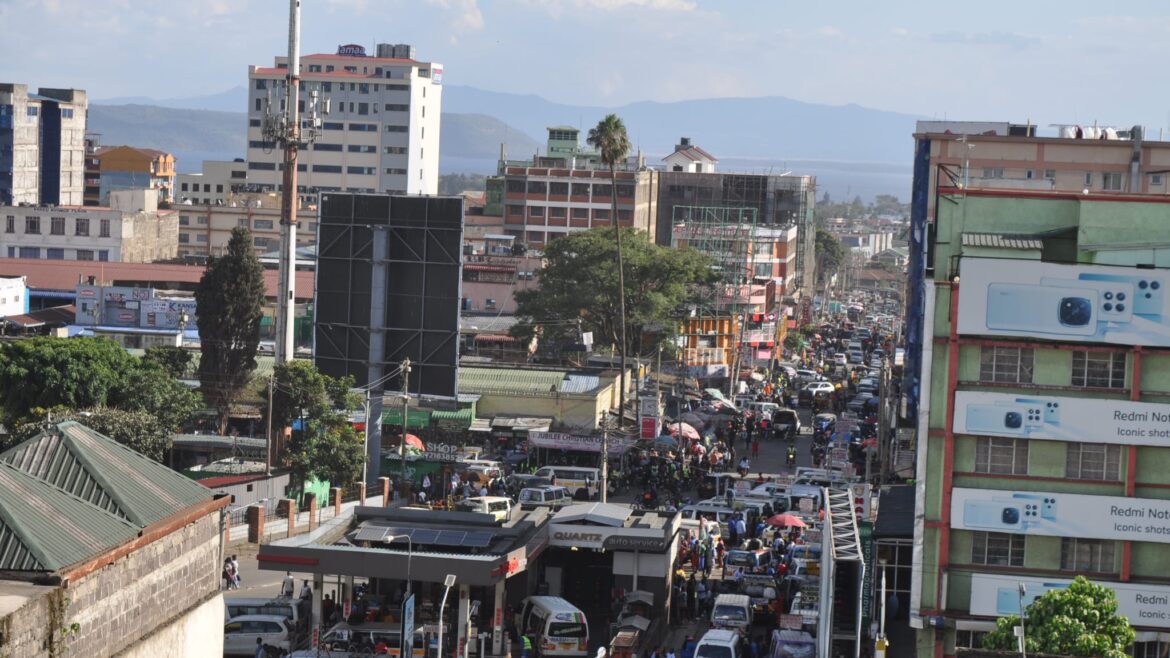
Today, Nakuru is a city that never sleeps. The streets are packed with people hustling to make a living, shopkeepers, hawkers, kiosk owners, and entrepreneurs of every kind. Transportation appears to be the city’s dominant occupation: boda-bodas, tuk-tuks, matatus, taxis, bicycles, buses, all weaving together in what looks like chaos but somehow works. Pedestrians spill into the roads, vehicles inch forward, and everyone seems to understand one unspoken rule: patience is non-negotiable.
Interestingly, what initially feels overwhelming eventually feels calming. There is order here, an organic, lived-in order that challenges the Western notion that structure must be rigid to function.
One thing that truly stood out was how clean the city is. Gone are the piles of rubbish that once dotted Nakuru. Sidewalks are well maintained, public utilities are in good shape, and the city council deserves credit for that. What saddened me, however, was seeing two iconic landmarks, the KFA (Kenya Farmers Association) and Standard Bank buildings, looking tired and neglected. Once symbols of Nakuru’s skyline and ambition, they now stand quietly among much taller, newer buildings.
The Absence That Raised Questions
Yet the most striking absence in today’s Nakuru was something I hadn’t expected at all: street children.
In the 1970s and 1980s, street children were becoming an increasingly visible part of Nakuru’s social fabric. Their numbers were relatively small then, and many of us assumed the problem would be temporary. My late mother, Niva Kegode, felt otherwise. She was divinely compelled to act. What began as informal support, food, care, and encouragement, became a lifelong commitment to children society had overlooked.
Before she passed away in 2018, the number of street children in Nakuru had grown from fewer than 100 (in the 1980s) to thousands.
So where were they now?
Niva Kegode and the Work That Couldn’t Wait
To understand what had changed, and what hadn’t, I met with three former street boys whom my mother once supported. Today, they are grown men, husbands, fathers, and informally employed or business owners. Their stories were sobering.
The street children problem, they told me, has not been solved. It has worsened. The reason I didn’t see street children in Nakuru’s central business district is simple: they are no longer allowed to be there. They’ve been pushed to the outskirts of the city, out of sight, but very much still present.
- For national context on street-connected children in Kenya, see estimates summarized by organizations such as Rescue Dada: https://www.rescuedada.org/external-environment/.
The conversation with the three former street boys reinforced why the work of Mwandani International matters.
From the Streets to Stewardship
For more than 40 years, I have watched the street children crisis grow, driven in part by rural poverty and unchecked rural-to-urban migration. Some families move to cities seeking opportunity, only to find hardship, homelessness, and despair. Addressing this problem is complex, there is no single solution, but that does not excuse inaction.
Mwandani International tackles the issue at its roots by focusing on rural poverty alleviation through value-added agriculture in Kenya. Stronger rural livelihoods mean fewer desperate migrations and fewer children ending up on the streets.
- County and national initiatives increasingly recognize the role of agricultural value addition in improving farmer incomes and rural employment: https://www.kenyanews.go.ke/county-promoting-value-addition-for-farm-produce-to-boost-farmers-returns/.
- Global development partners are also investing heavily in agricultural value chains and market access for smallholder farmers in Kenya: https://www.worldbank.org/en/news/press-release/2022/03/29/kenya-secures-250-million-to-help-500-000-smallholder-farmers-enhance-value-addition-and-access-markets.
Equally inspiring is what these three former street boys are now doing. Together, they have formed a welfare and economic empowerment group aimed at addressing drug use among current street boys. Their motivation is simple: someone once helped us, now it’s our turn.
That is the ripple effect of compassion.
Addressing Poverty at Its Roots
As I reflect on my time in Nakuru, I see a city bursting with life—restless, resilient, and determined. Challenges abound, yet so does hope. There is joy in the chaos, strength in community, and a shared refusal to give up.
Most importantly, I am reminded that real change does not always begin with institutions. Sometimes, it begins with one person, like the late Niva Kegode, who chose to see, to care, and to act. And when that act is sustained, supported, and multiplied through organizations like Mwandani International (https://mwandani.org), especially through long-term approaches such as value-added agriculture in Kenya, lives are not just changed, they are redirected.
That, to me, is the real story of Nakuru.
_________________________________________________________________________________________________________________________
This journey back to Nakuru reflects change, legacy, and the power of value-added agriculture in Kenya to address poverty at its roots. Learn how Mwandani International is carrying this work forward, and how you can stand with it.
Comments 2
Chelsea fan
What an eye-opening experience you’ve shared!
And kudos to those gentleman for paying it forward!
George Kegode
Thank you Chelsea fan. Paying it forward is always the best policy when built on a foundation of kindness.